

BAP Takes the Stage at AIA 2026 in San Diego
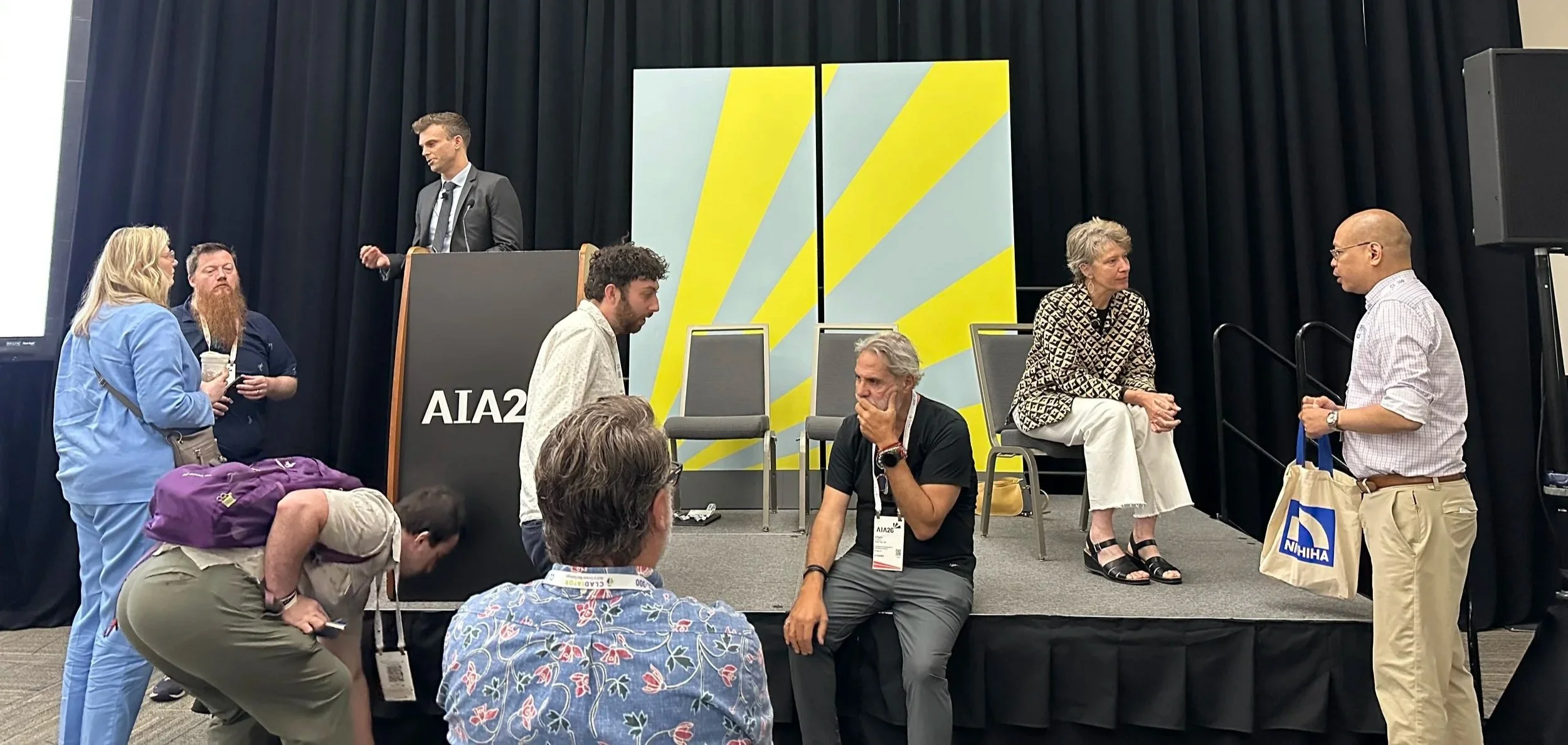
Ellen and Mack engage with audience members after the talk
On Saturday, June 13, Ellen Bildsten, AIA, principal architect at Bildsten Architecture and Planning (BAP), joined attorney Mack Carlson of Brownstein Hyatt Farber Schreck LLP to present "Leveraging California Housing Laws to Build Community" at the AIA 2026 Convention in San Diego. The hour-long session drew on BAP's hands-on experience with California's evolving housing law landscape to show how architects and planners can use state legislation not just as a compliance exercise, but as a genuine tool for community-building.The presentation opened with a neighborhood-scale thought experiment: given a roughly 300-acre study area in an existing neighborhood in the city of Ventura with approximately 1700 lots and 2100 existing dwelling units, what happens if even a fraction of property owners take advantage of current state housing laws? The answer, as Ellen and Mack walked through the numbers, is substantial. Under a medium-adoption scenario, the analysis projected up to 2500 new units — nearly doubling the neighborhood's existing housing stock. At higher adoption rates, the estimated increase reached 6700 units and roughly 16,000 additional residents.
The session covered the full toolkit of state housing laws now available to property owners, including SB 9 lot splits, ADUs on single-family parcels, the Starter Home Revitalization Act (SHRA), SB 4 opportunities on faith-based and nonprofit properties, multifamily ADU additions, Density Bonus Law, Adaptive reuse, and streamlined approval pathways under SB 35 and SB 423. Rather than treating these laws as isolated provisions, Ellen and Mack examined how they layer and interact — and how a thoughtful design approach can activate multiple pathways on a single site. The presentation didn't stop at unit counts. The second half explored what more housing actually means for a neighborhood: improved bike infrastructure, expanded transit ridership, increased tree canopy through new development requirements, pedestrian safety improvements, and better-funded community spaces. The message is that density done well doesn't just solve a numbers problem. It builds the tax base and population density that makes walkable, transit-served, amenity-rich neighborhoods financially viable. These are pro-housing points that audience members can bring back to their communities for use during difficult conversations around housing growth.
The overall conversation in San Diego during the Convention mirrors what BAP hears every day in their practice: housing supply is the region's most pressing quality-of-life challenge, and the tools to address it are already on the books. The goal is knowing how to use them.
Interested in learning how state housing laws apply to your property or project? We're happy to share our knowledge - you can reach us at bap@sb-designgroup.com.